Pricing
From one classroom to a whole district. Every option includes the Breathe Clear platform in English and Spanish for the students you serve.
Live simulations
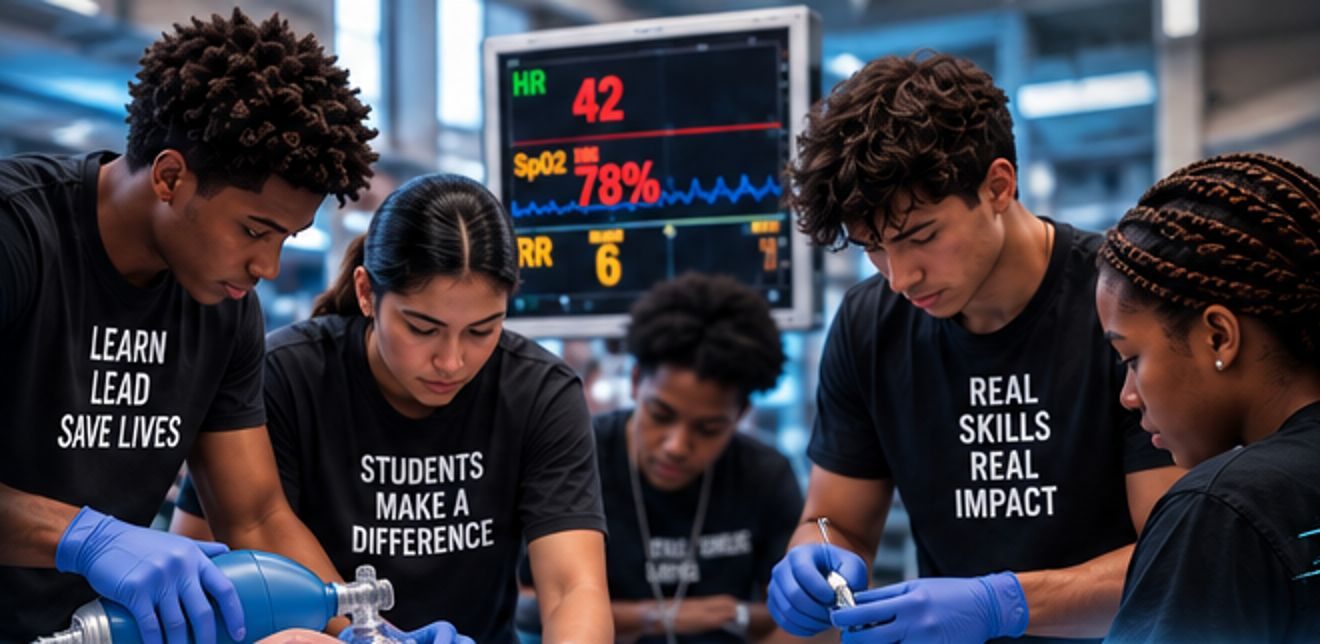
Nurse Charles at your school with the monitor, manikins, AED trainer and naloxone trainers.
$1,000
per session · up to 20 students
Small-group simulation
About 60 minutes. Every student takes a role in the code. Ideal for a health class, team, club or leadership group.
$750
each additional small group, same day
Back-to-back groups
Run several groups of 20 in one visit, class period by class period.
$2,500
per event · up to 120 students
Full live event
About 90 minutes. Teams run the code while classmates watch the monitor, then a full debrief.
$4,000
full school day
All-day visit
Up to four sessions in one day, any mix of small groups and full events.
The platform
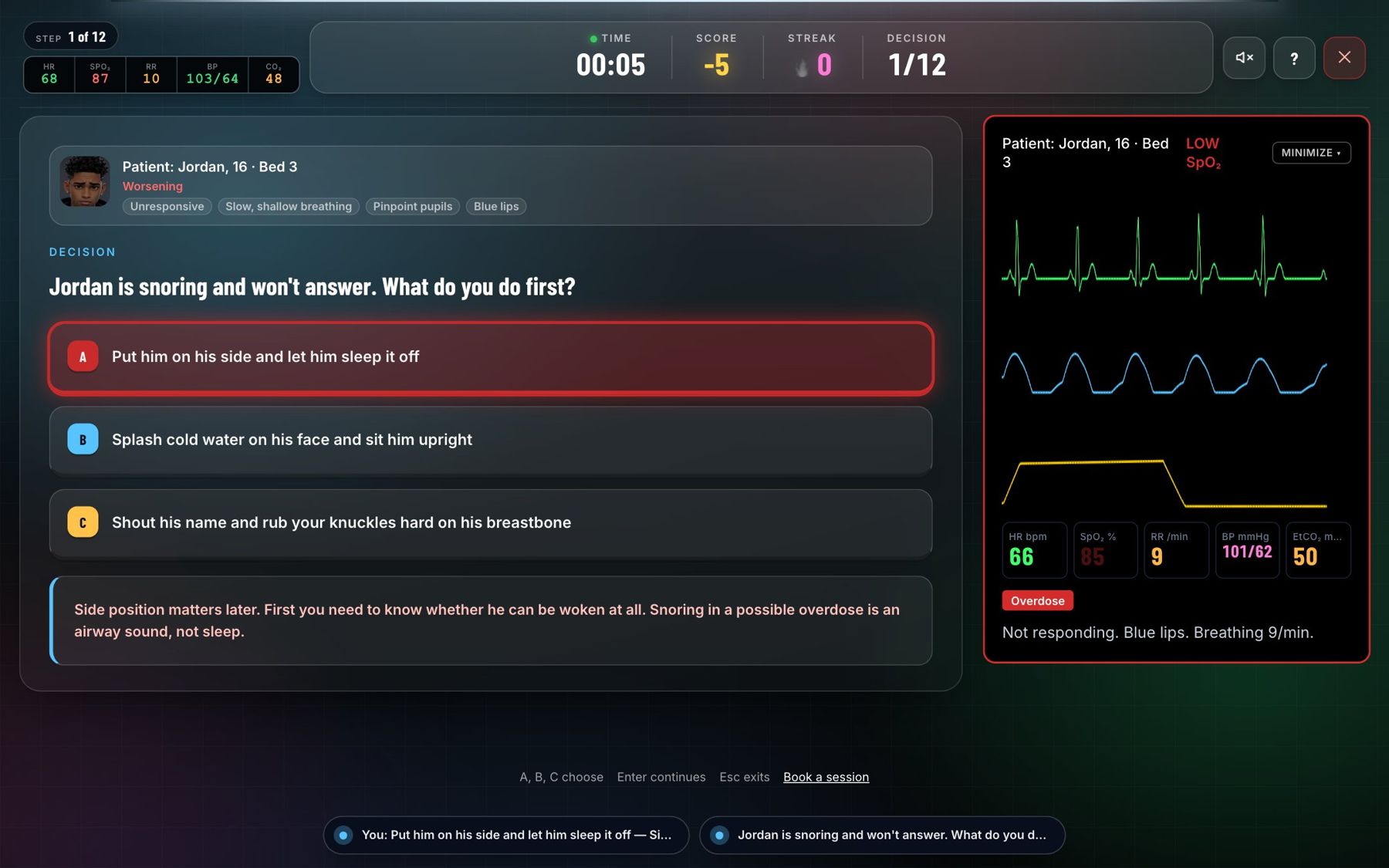
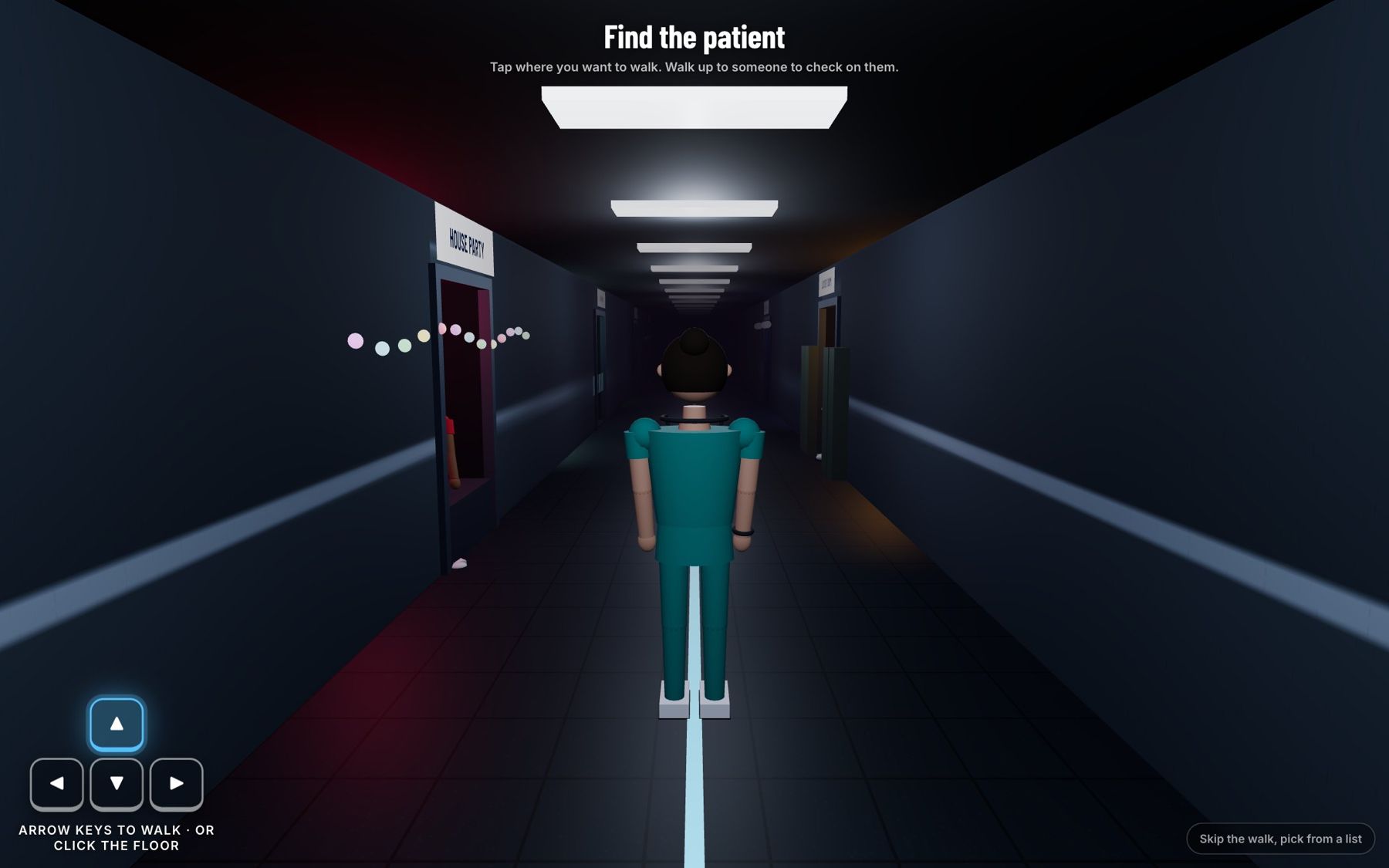
The Run a Code simulation, the body section and the overdose response guide, all year, on any device.
$300
per classroom, per year · up to 35 students
Classroom
One teacher's classes for the school year.
$750
per school, per year
Middle school
Every student and staff member at one middle school.
$1,500
per school, per year
High school
Every student and staff member at one high school.
Staff and families
$1,500
per session · half day
Staff training
Teachers, counselors and nurses learn to run the program and respond to an overdose with the school's naloxone.
$3,500
per day
Train-the-trainer
Prepares district health and PE leads to train their own schools.
$1,000
per evening
Parent and family night
What parents need to know about vaping, counterfeit pills and naloxone. Spanish available.
$2,500
per workshop day
Conferences and youth leadership
Workshops for student leadership conferences, coaches and community events.
Packages
$5,000
one school, one year
School package
High school platform license, one full live event, two small-group sessions and the before-and-after results report.
$10,000
two schools, one year
Founding district pilot
Two school packages, plus a half-day staff training free and a combined results report for district leadership.
Custom
three or more schools
District
Licenses across your schools, train-the-trainer and a set number of live events each semester.
Free with every package
Everything a teacher needs to keep Breathe Clear going after we leave the building, at no extra cost.
Classroom curriculum
Five high school lessons and four middle school lessons, about 50 minutes each, built around the simulation.
Teacher guide
How to prepare, run the simulation with a class, talk about substances safely and respond if a student discloses use.
Student workbook and worksheets
Printable activities for every lesson: myth or fact, overdose signs, the 911 script, refusal practice and a personal stress plan.
Georgia standards map
Every lesson matched to Georgia health standards, the annual drug and vaping education rule and high school CPR/AED.
Family materials
A family letter and parent guide in English and Spanish, so the conversation continues at home.
Video library
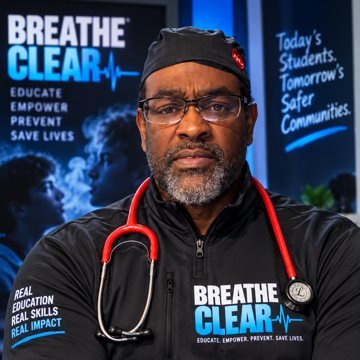
Short clips from Nurse Charles, matched to each lesson.
Before-and-after survey
An anonymous ten-question survey and a report showing what changed for your students.
English and Spanish
The whole platform, for every student and family.
Live event dates are limited each semester and booked in the order agreements are signed. Travel is included within 50 miles of Atlanta; beyond that, travel is billed at cost. Prices are per school year. Participation does not certify students in CPR; for certification, use an authorized American Heart Association or Red Cross course.